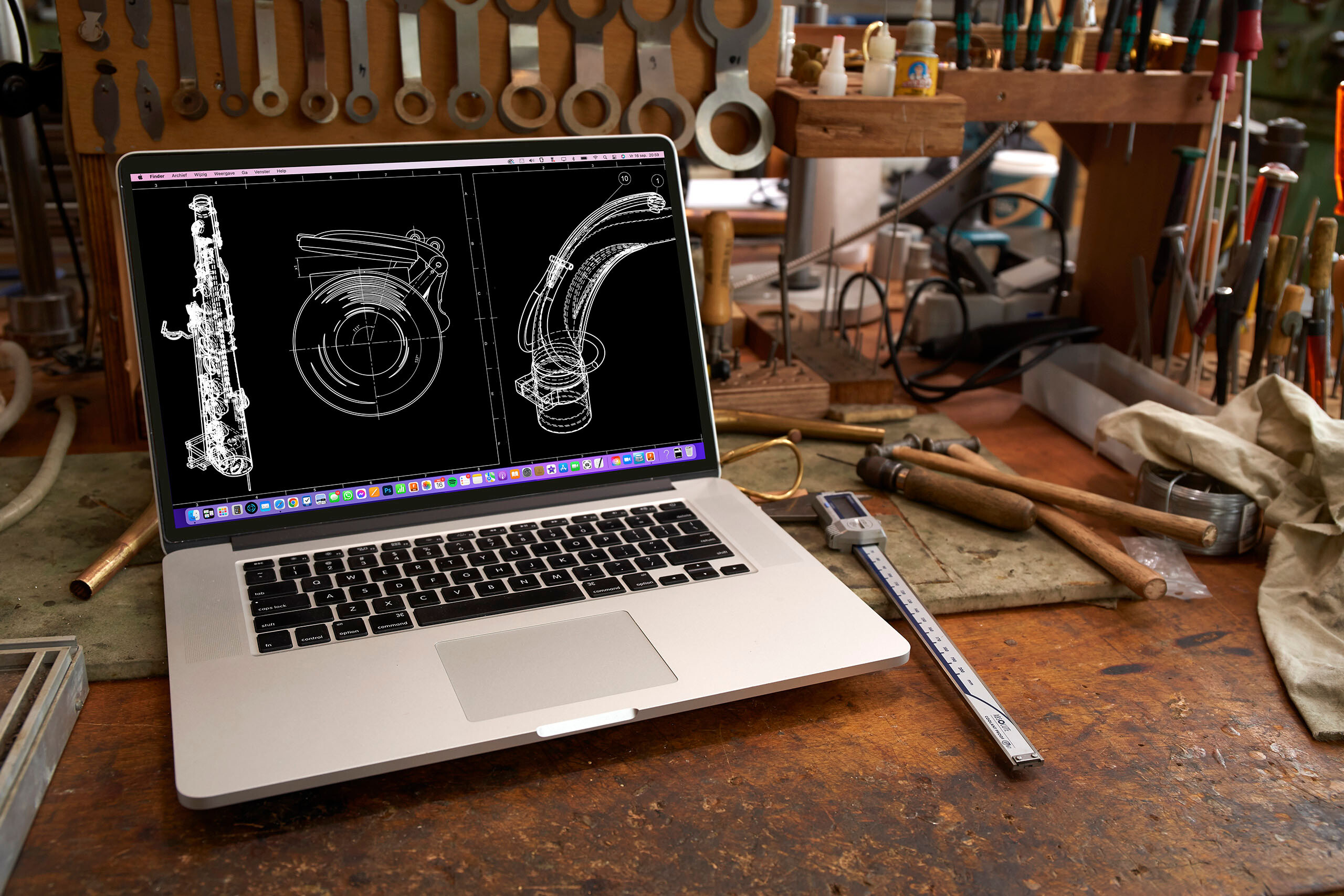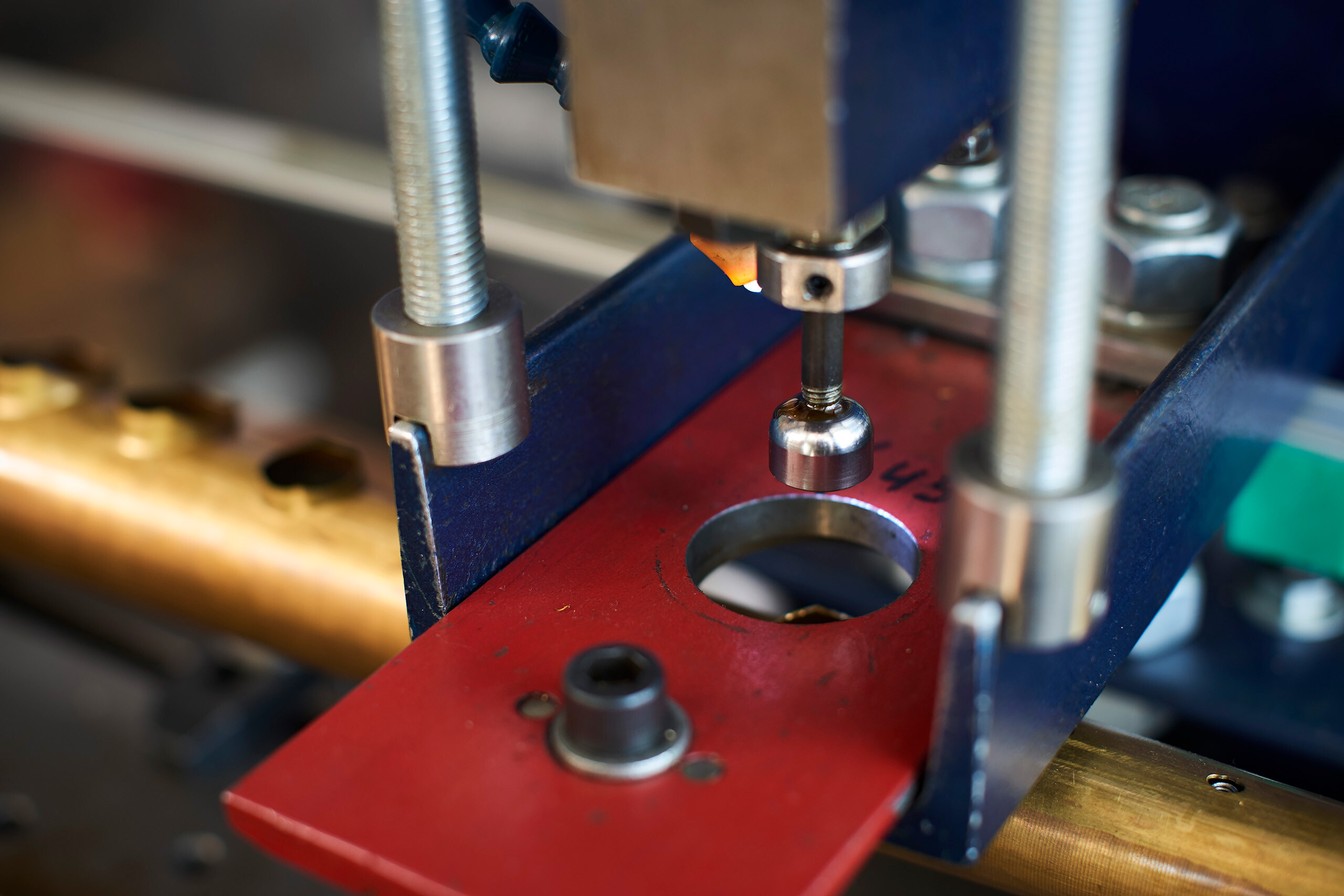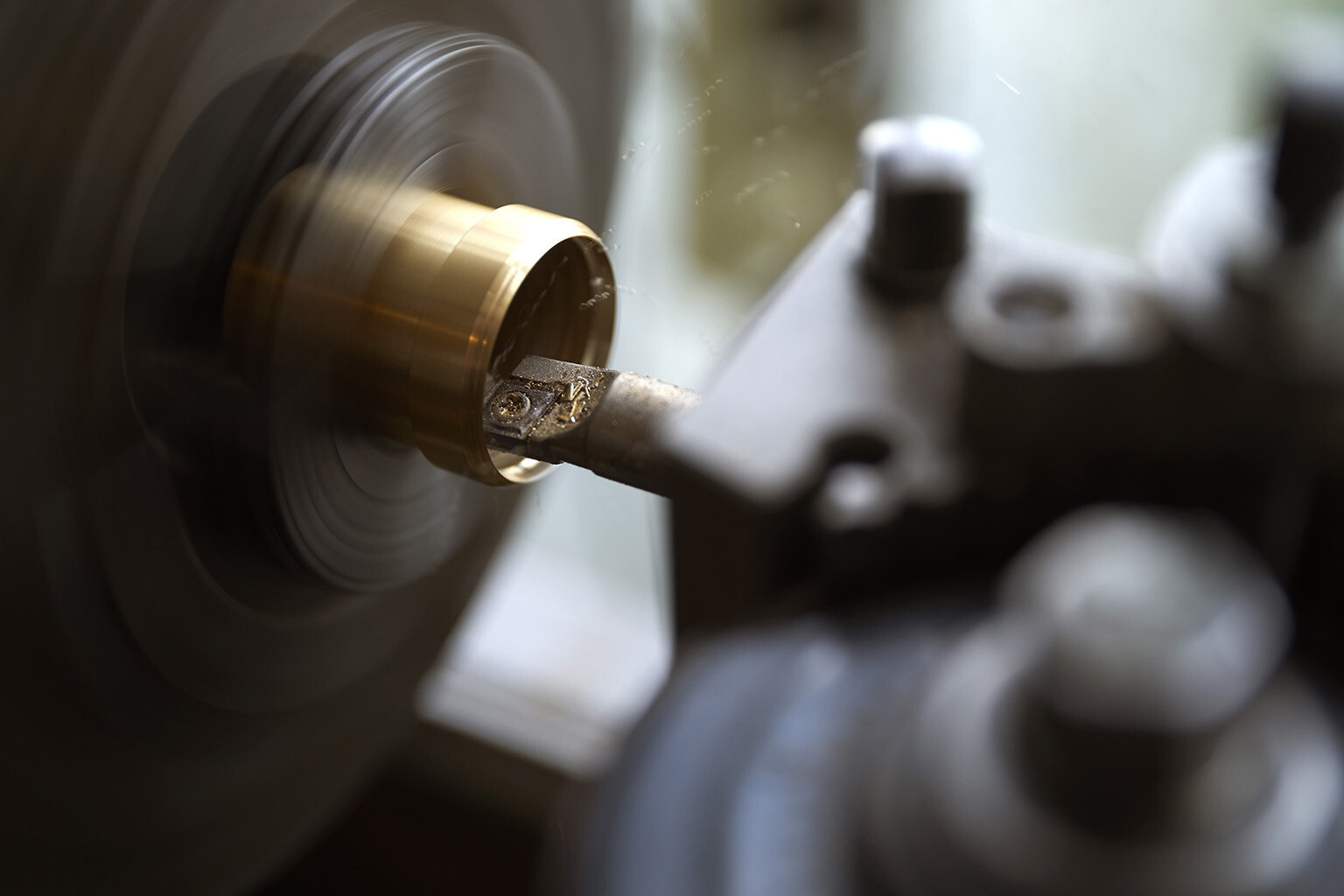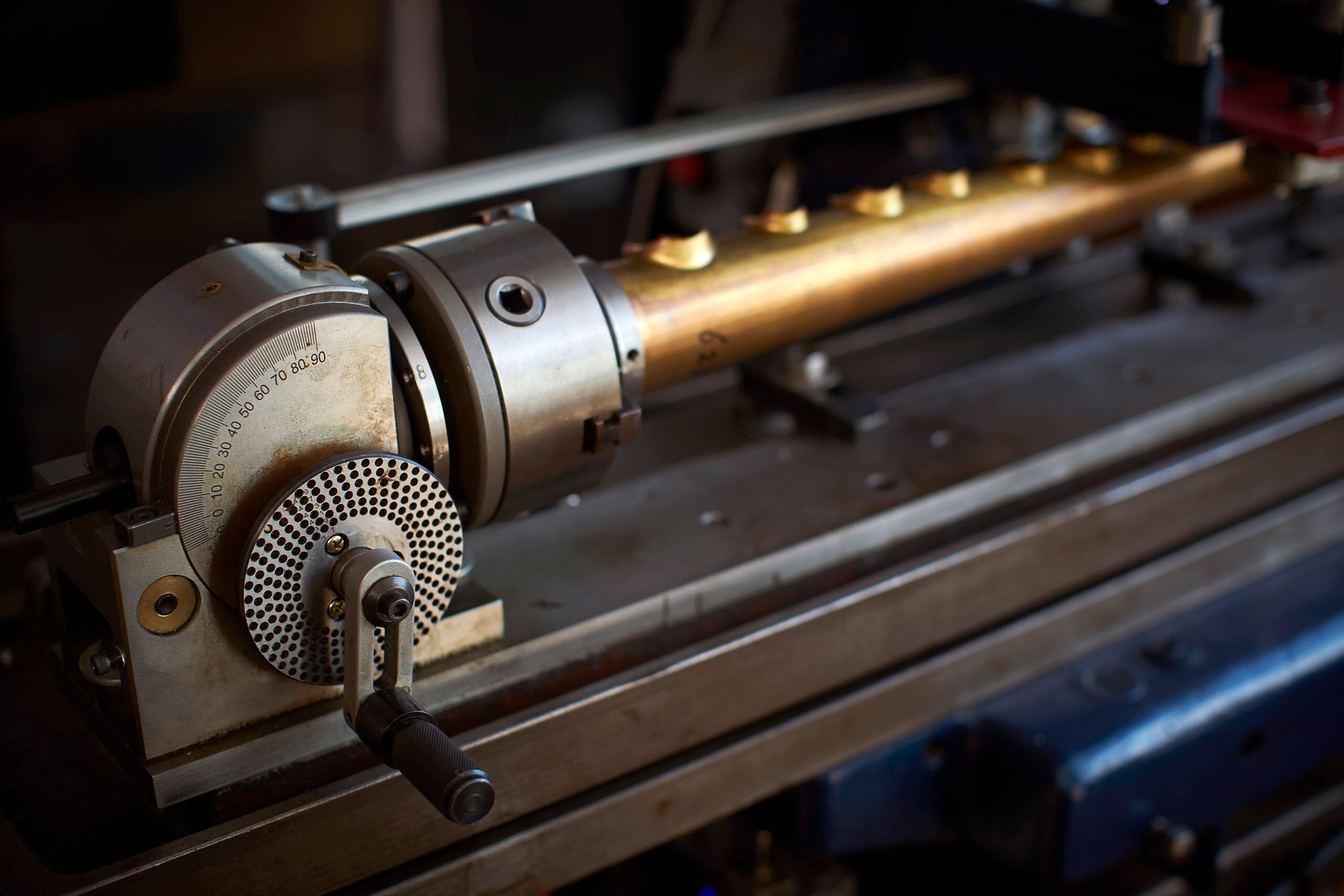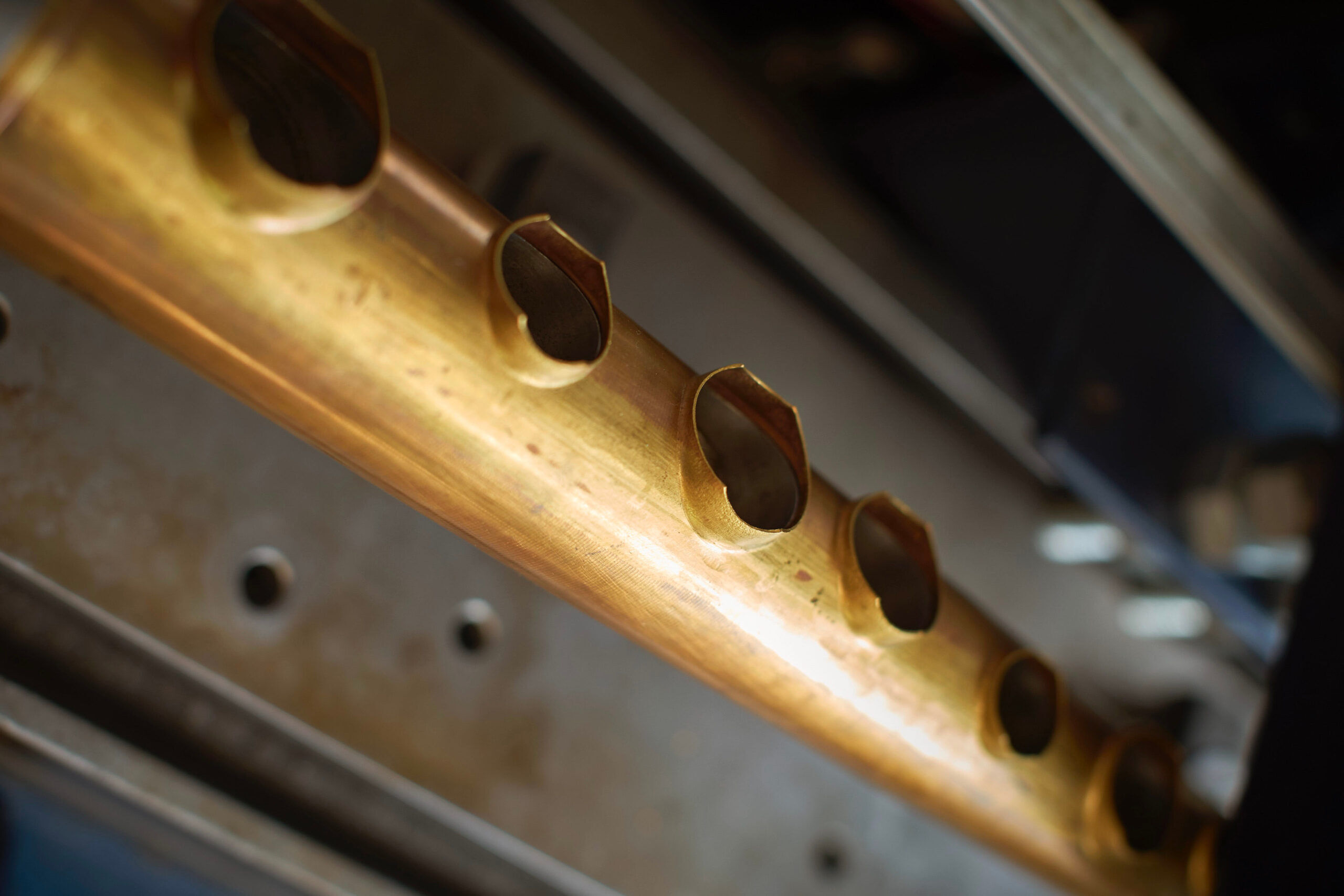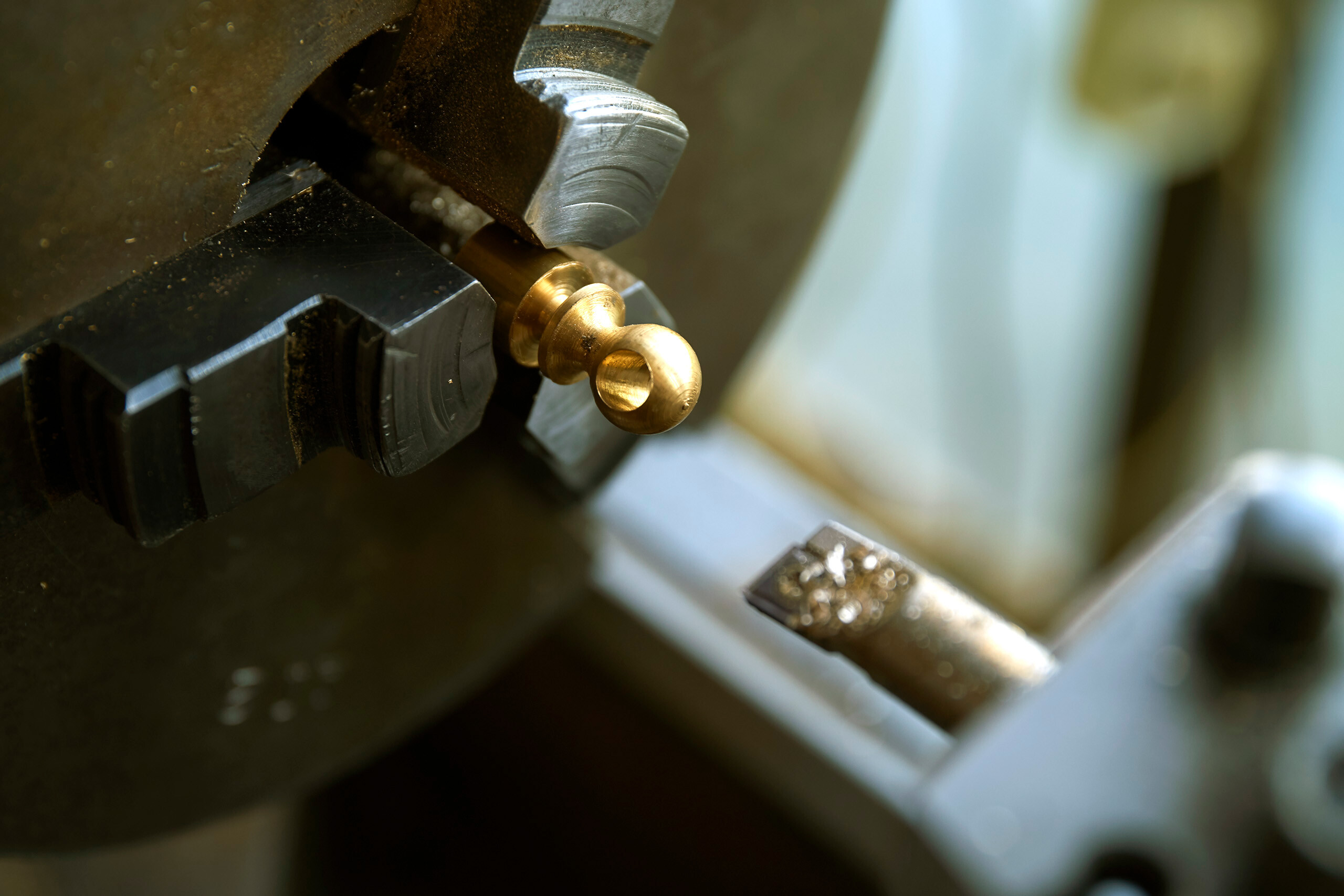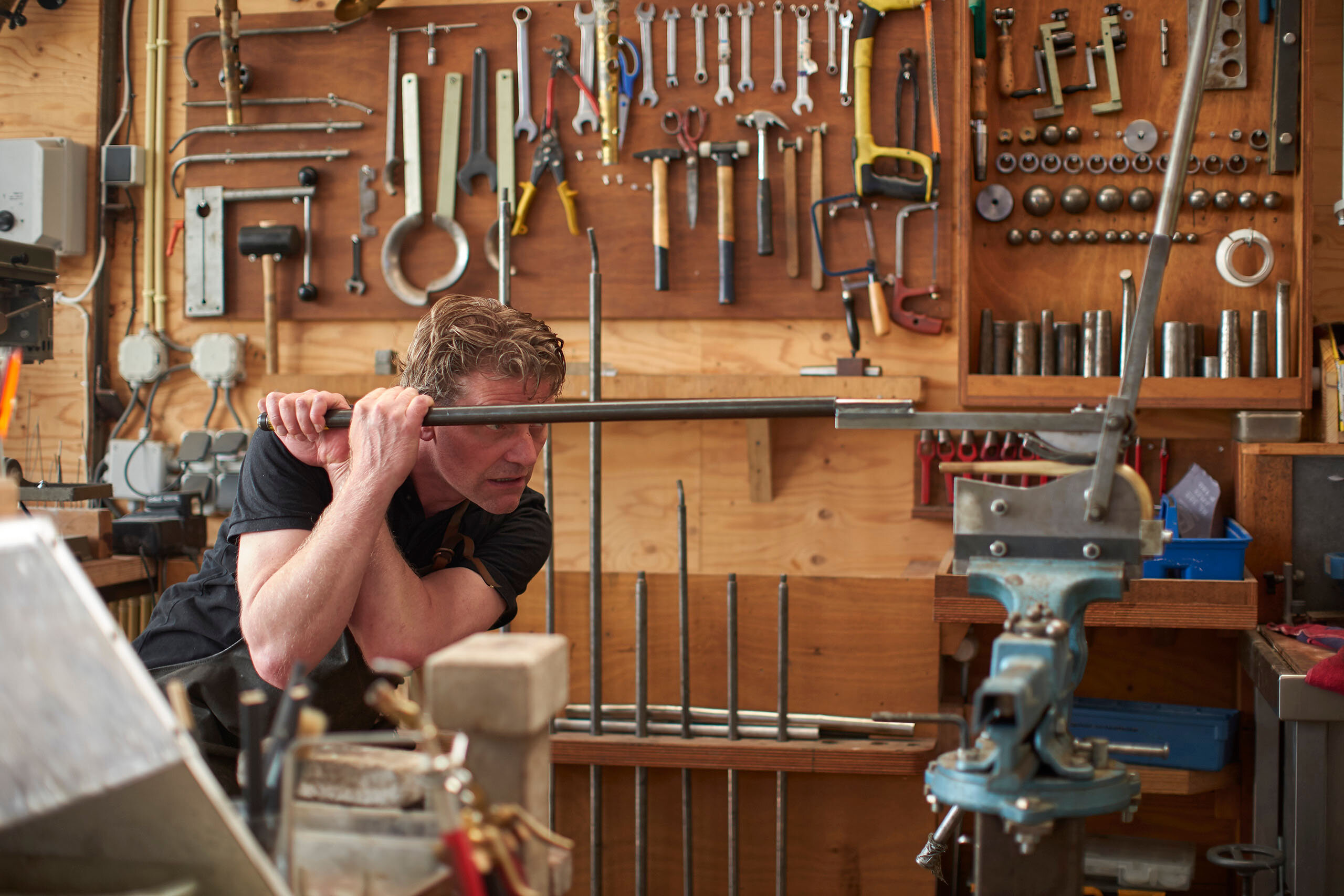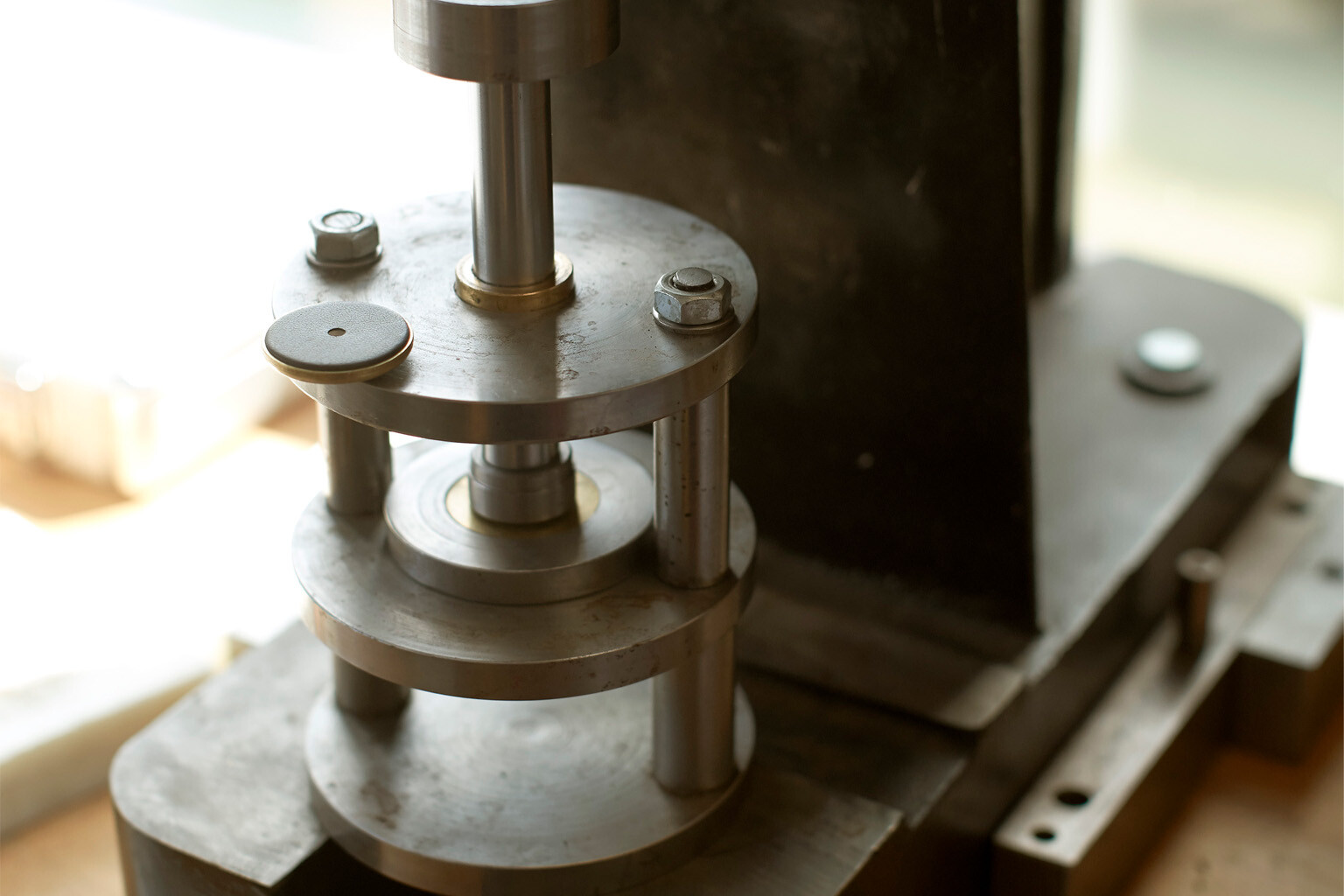
Through years of hands-on work at the bench – including his own specialist workshop, Amsterdam Winds – Friso developed a precise understanding of the saxophone as an acoustic system.
His work is guided by a scientific mindset shaped by academic research in neurobiology, where systematic testing and critical evaluation were central.
This long-term exploration led to the development of the Free Wind alto saxophone, played by musicians such as Candy Dulfer and Will Vinson.
Today, Friso’s work is focused on saxophone necks. Shaped by years of careful listening, experimentation, and close collaboration with musicians, the result is a neck that allows the player to focus entirely on sound and musical ideas.

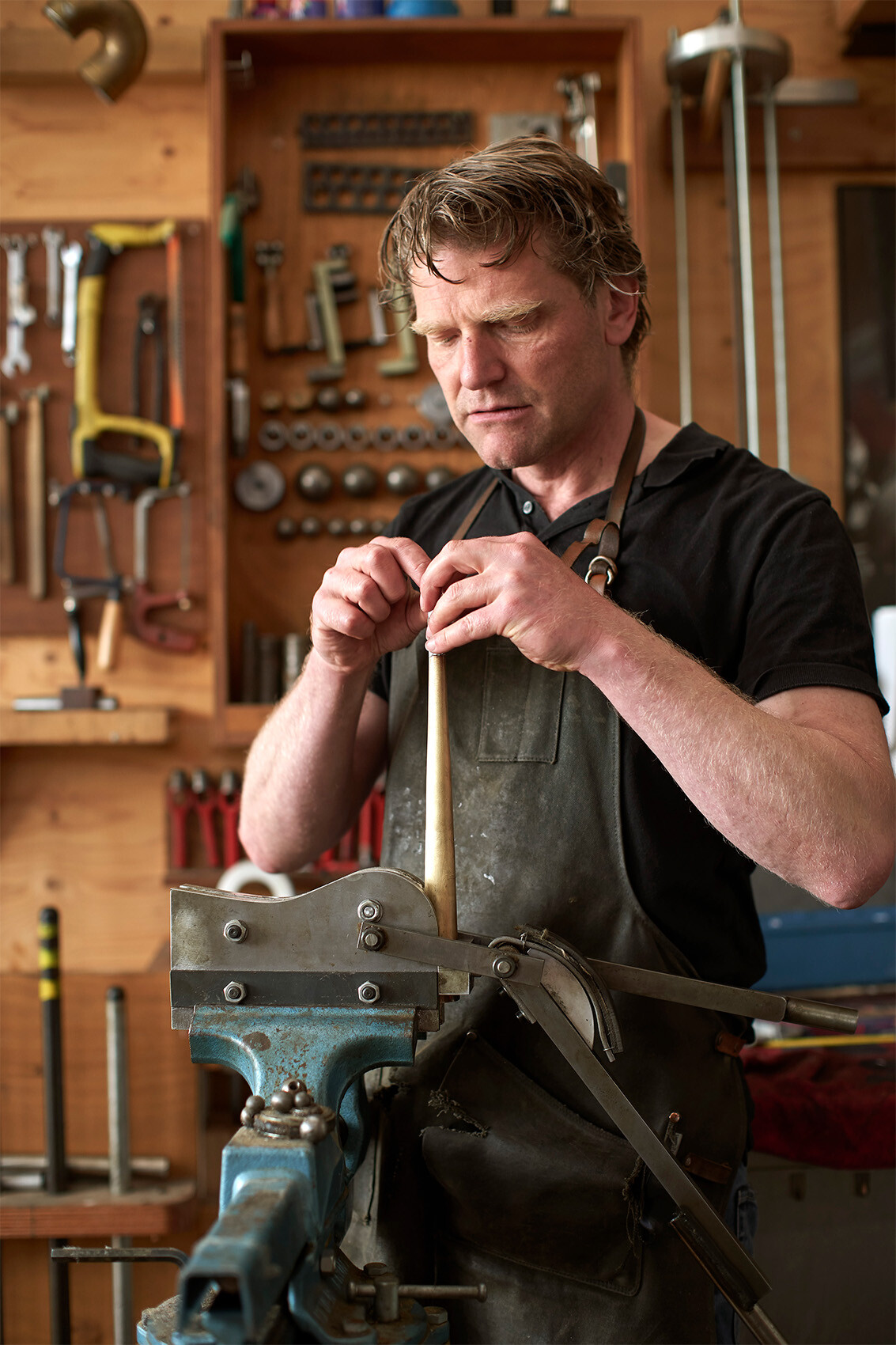
Beyond his work on saxophone necks, Friso has designed and built a complete tenor saxophone as part of a long-term acoustic exploration.
This instrument was developed through sustained, practice-based testing in real musical contexts, both on and off stage. It has been repeatedly played in concert settings — most notably by Joshua Redman, who performed multiple test concerts on successive prototype versions over an extended period.
These performances formed an essential part of the saxophone’s development, grounding the work in real musical practice.
Beyond his work on saxophone necks, Friso has designed and built a complete tenor saxophone as part of a long-term acoustic exploration.
This instrument was developed through sustained, practice-based testing in real musical contexts, both on and off stage. It has been repeatedly played in concert settings, most notably by Joshua Redman, who performed multiple test concerts on successive prototype versions over an extended period.
These performances formed an essential part of the saxophone’s development, grounding the work in real musical practice.
Read more about Friso
Featured in Dutch newspaper Het Parool
Featured in Esquire
Featured in Japanese magazine Sax&Brass
Featured in Esquire

Friso Heidinga in Esquire

“The combination of craftsmanship and the elusively beautiful sound ultimately produced is what makes this work so very satisfying.”
Friso Heidinga